
The Other Side of PISA for Flanders: Time to Really Use the Digital and AI Lever
What the OECD reports actually say about screens, computational thinking and AI in the classroom
Forgive us, but as <edtech/station> we analysed the PISA results (now that the dust has settled a bit) through a technological lens, and so…
Anyone who looks at the OECD's PISA results can't get around it: the scores for education in Belgium, and certainly also in Flanders, are still going down when it comes to basic skills such as reading and mathematics (in science we see no significant decline, although that received somewhat less attention).
But fine: the numbers don't lie. Where we once prided ourselves on our Flemish top quality, we now see that more and more fifteen-year-olds struggle with reading comprehension and mathematical reasoning.
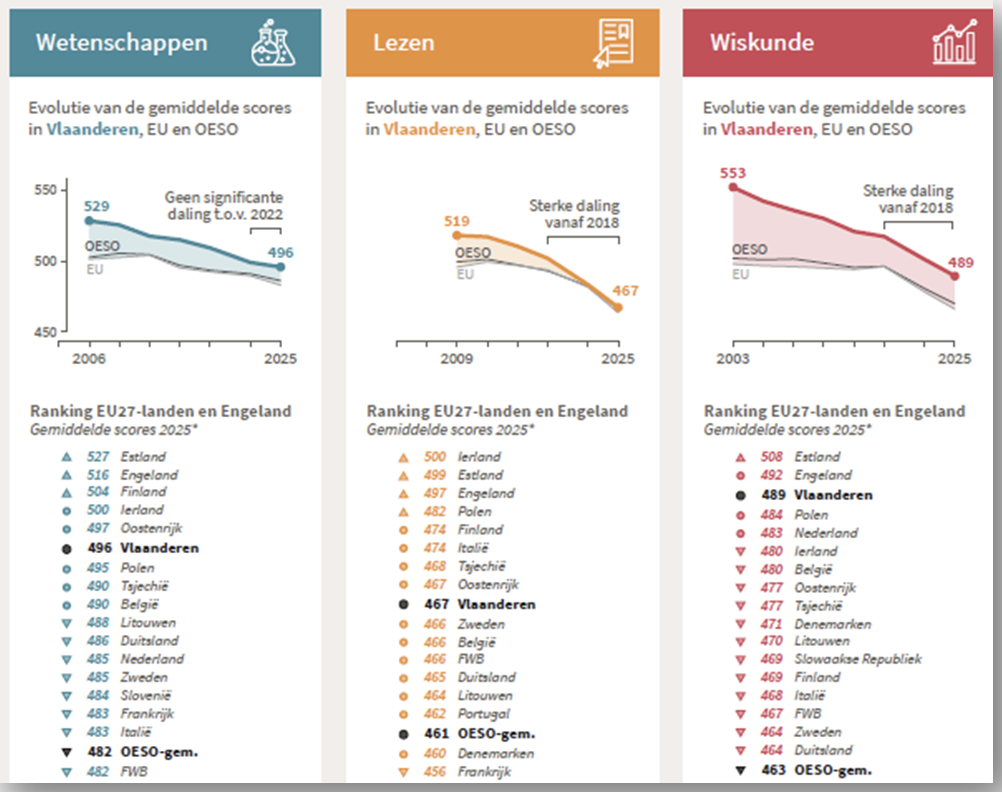
Anyone who focuses only on that downward spiral, however, misses the bigger story. Because if you read the official OECD reports carefully, you see that the key to recovery does not lie in nostalgia for the classroom of thirty years ago, but certainly also in smartly embracing digitalisation, computational thinking and artificial intelligence (AI).
Technology and AI at school: not banning, but using better
The OECD's PISA surveys of schools show very clearly that technology is a double-edged sword:
- Mindless consumption doesn't work: uncontrolled screen time and notifications during class directly harm performance.
- Purposeful learning and AI do pay off: when digital resources and AI-based applications are used as a tool that helps students understand difficult concepts step by step, this very clearly strengthens the learning process.
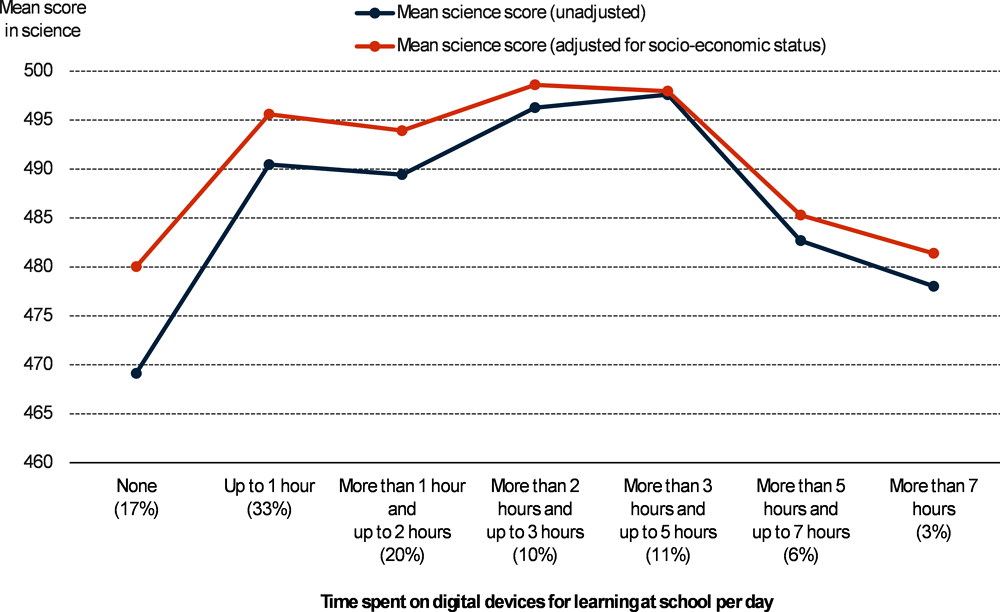
So what about Flanders? It's not about whether we allow screens or AI in our classrooms, but how we teach students to work with them. Sounds logical, doesn't it?
The importance of computational thinking and AI literacy
An important spearhead in the PISA framework is the emphasis on computational thinking (computational problem-solving) and learning in a digital world. The OECD stresses that these combined skills are crucial to make young people resilient in a society that is digitalising and personalising at breakneck speed.
Our Flemish schools score really well here: we lead the European pack (we are 3rd after Estonia and England).
This is about much more than just being able to write a few lines of code:
- Systems thinking and modelling: the ability of students to unravel a complex problem, abstract it and come up with a workable digital solution for it.
- Learning to work critically with AI: the OECD stresses that young people must not only learn to use AI, but above all learn to critically evaluate its output, separate facts from hallucinations and use AI to sharpen their own reasoning.
- Active experimentation: through interactive digital applications, young people learn to try things out, analyse mistakes and adjust their approach immediately.
What does this mean for our schools?
The OECD's message therefore seems clear:
The answer to declining scores (apart from the knowledge-rich curriculum, of course) is not to keep the digital world or AI outside the school gate. We must use technology and AI precisely as the powerful lever they can be: not to take over the student's cognitive thinking, but to sharpen deep understanding, analysis and problem-solving ability.
References
OECD (2026), PISA 2025 Results (Volume I): Future-Ready Students, PISA, OECD Publishing, Paris, https://doi.org/10.1787/73451bc5-en.
Berlamont, L., Lermytte, A., Abbeel, F., Lemaitre, R., Tavernier, N., & van Braak, J. (2026). Vlaams Rapport PISA 2025 (Flemish Report PISA 2025). Ghent University, https://www.pisa.ugent.be/resultaten/pisa-2025/vlaamse-resultaten